🔊
2024-11-08
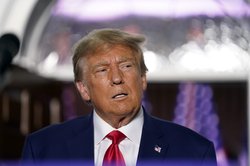
The hosts process Trump’s election win and push back on postmortems that blame Never Trumpers, arguing their core warnings about Trump and democratic norms still stand even if some tactical predictions missed. They debate why voters prioritized inflation and personal economic pressure over abstract threats to democracy, and what Democratic losses among non-college and some minority voters say about a shifting, multiracial working-class Republican coalition. A central theme is whether Democrats need a more populist, anti-institution message to compete in a broader anti-elite, social-media-driven culture where authenticity and grievance matter more than traditional political appeals. They also wrestle with how to respond to a second Trump term—whether harm mitigation or letting consequences play out is the better strategy—alongside concerns about institutions, tech-oligarch influence, and the likelihood of normal elections continuing through 2028. Throughout, they reflect on how desensitization, information silos, and constant “change election” dynamics have altered what voters want and how politics works.
🌐
2024-11-08
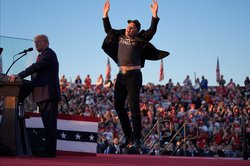
Elon Musk backed Donald Trump with money and public support and is poised to gain influence through a proposed “government efficiency commission” that could shape agency budgets and rules affecting his own businesses. The article argues that a second Trump administration would intensify a loyalty-based political economy in which tech leaders are rewarded or punished not just for lobbying but for visible personal allegiance. After the July assassination attempt and especially following Trump’s victory, prominent executives including Mark Zuckerberg and Jeff Bezos offered tailored praise and outreach, reflecting a shift from the wary posture many tech firms held during Trump’s first term. With privatization, government and military contracting, and major AI deals at stake, tech companies see cooperation as both a growth strategy and a way to reduce exposure to retaliation. The result, the piece suggests, is a more politicized industry where patronage and personal favor drive outcomes, with Musk best positioned to profit but also most exposed to the volatility of that system.
🔊
2024-11-07
Tim Miller and Tom Nichols react to Donald Trump’s election victory, arguing that many voters knowingly chose the chaos and “drama” he represents and will now live with the consequences. They debate what Democrats can learn from the loss, focusing less on policy than on cultural signaling, coalition “purity tests,” and the party’s difficulty communicating in a way that feels normal and attentive to working-class voters without abandoning minority rights. The conversation also examines public misunderstandings about executive power and the economy, with Nichols warning Trump will inherit strong economic conditions, claim credit, and then damage them through tariffs while supporters blame Democrats. They wrestle with how much to resist versus letting Trump’s agenda play out, drawing a line at actions that could cause severe harm, and emphasize the need for journalism and civic engagement that documents realities without normalizing them. Finally, they discuss how authoritarian actors abroad interpret the moment and argue the larger stakes are the survival of the liberal democratic order against a rising global authoritarian movement.
🔊
2024-11-07
The episode examines how Donald Trump won decisively, focusing on a broad rightward shift across the electorate, including notable gains among Latino voters and young Black men, and a weaker-than-expected surge among women after Dobbs. The guests argue that years of norm-breaking and inflammatory rhetoric have helped desensitize many voters to behavior they see as authoritarian, even as many people cast ballots primarily based on economic frustration rather than democracy concerns. They discuss how a second Trump term could test democratic institutions through efforts like politicizing the civil service, pursuing loyalist appointments aligned with Project 2025, and potentially using government power to target opponents. The conversation also weighs major policy flashpoints—including mass deportations, tariffs, and uncertainty around Ukraine aid—while stressing that outcomes will depend heavily on personnel choices and congressional constraints. Finally, they explore how disinformation and “alternate realities” fuel cynicism, and suggest that opposition movements in other countries have rebuilt strength by forming broad coalitions and trust networks organized around concrete issues ...
🔊
2024-10-18
PJ Vogt talks with ProPublica reporter Jesse Eisinger about the leaked “Secret IRS Files” and what they reveal about how some billionaires legally pay little or even nothing in federal income tax. The episode explains the “buy, borrow, die” strategy, in which ultra-wealthy people avoid taxable wages and instead borrow against appreciating assets, letting them spend untaxed money while deferring taxes indefinitely. It then explores policy responses, including the Biden-Harris proposal to tax unrealized gains for the very richest Americans, alongside skepticism about its practicality and alternative fixes like ending step-up in basis and the carried interest loophole. The conversation widens into a historical and political look at why taxing concentrated wealth has been so contentious in the U.S., even when public opinion supports it. The episode closes with the story of IRS contractor Charles Littlejohn, the whistleblower who leaked the tax data, and the ethical and legal fallout of his actions.
🔊
2024-10-18
The episode investigates why taxing billionaires is so difficult, using ProPublica reporter Jesse Eisinger’s account of receiving and validating a leaked trove of IRS data revealing how the ultra-wealthy can report little taxable income despite massive gains in net worth. It explores the ethical and political rationale for scrutinizing billionaire tax privacy, arguing that extreme wealth confers public power and that transparency can expose legal strategies that undermine fairness. The conversation then traces how the U.S. income tax evolved from a public, war-driven class measure into a permanent mass system shaped by lobbying, loopholes, and shifting economic realities. Through the 20th century, the show explains how progressive rates and salary-based executive pay once made the rich easier to tax, and how later tax cuts and “financialization” shifted wealth toward stocks and unrealized gains that are often lightly taxed or invisible until sale. The episode sets up a follow-on installment that will detail a major legal method billionaires use to shield wealth and what it would take to close that gap.
1